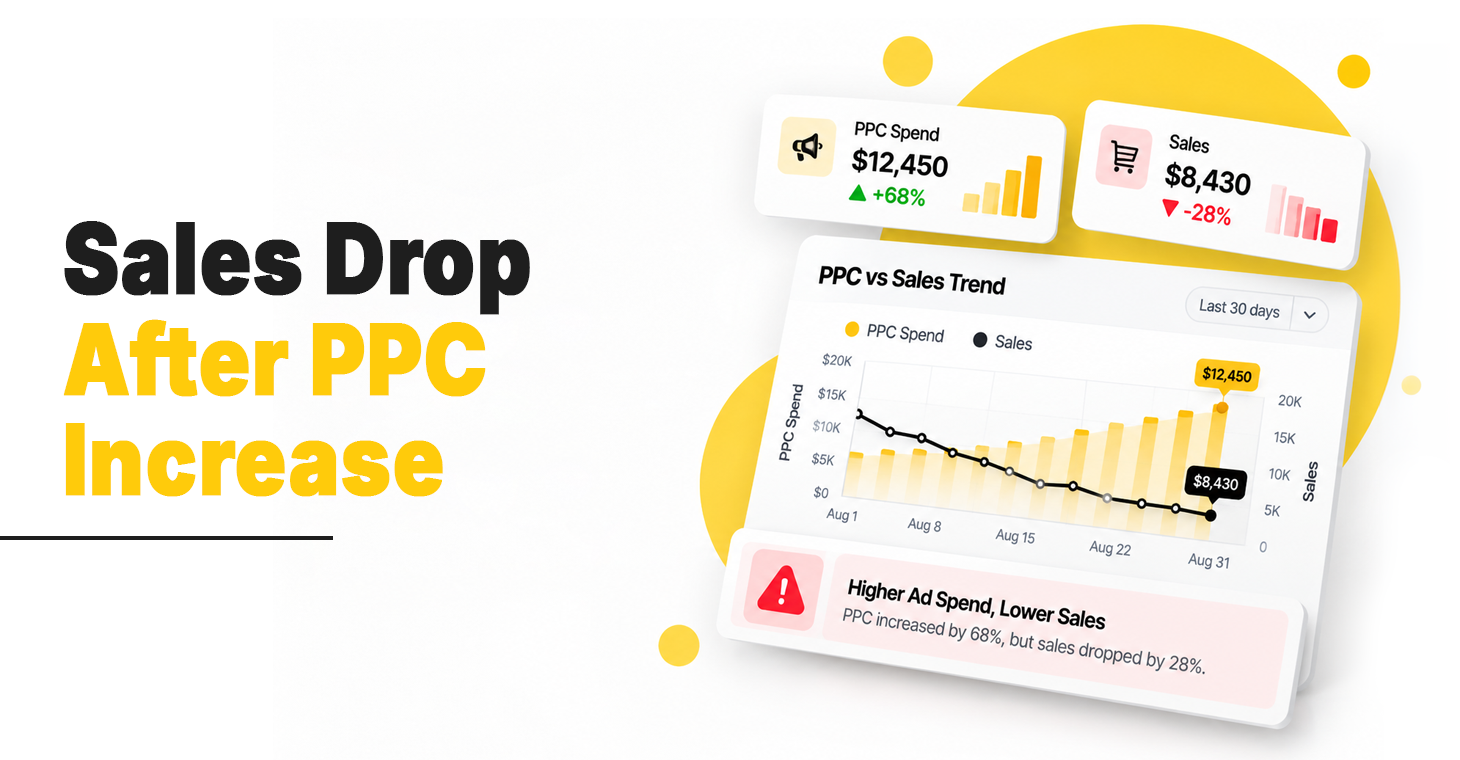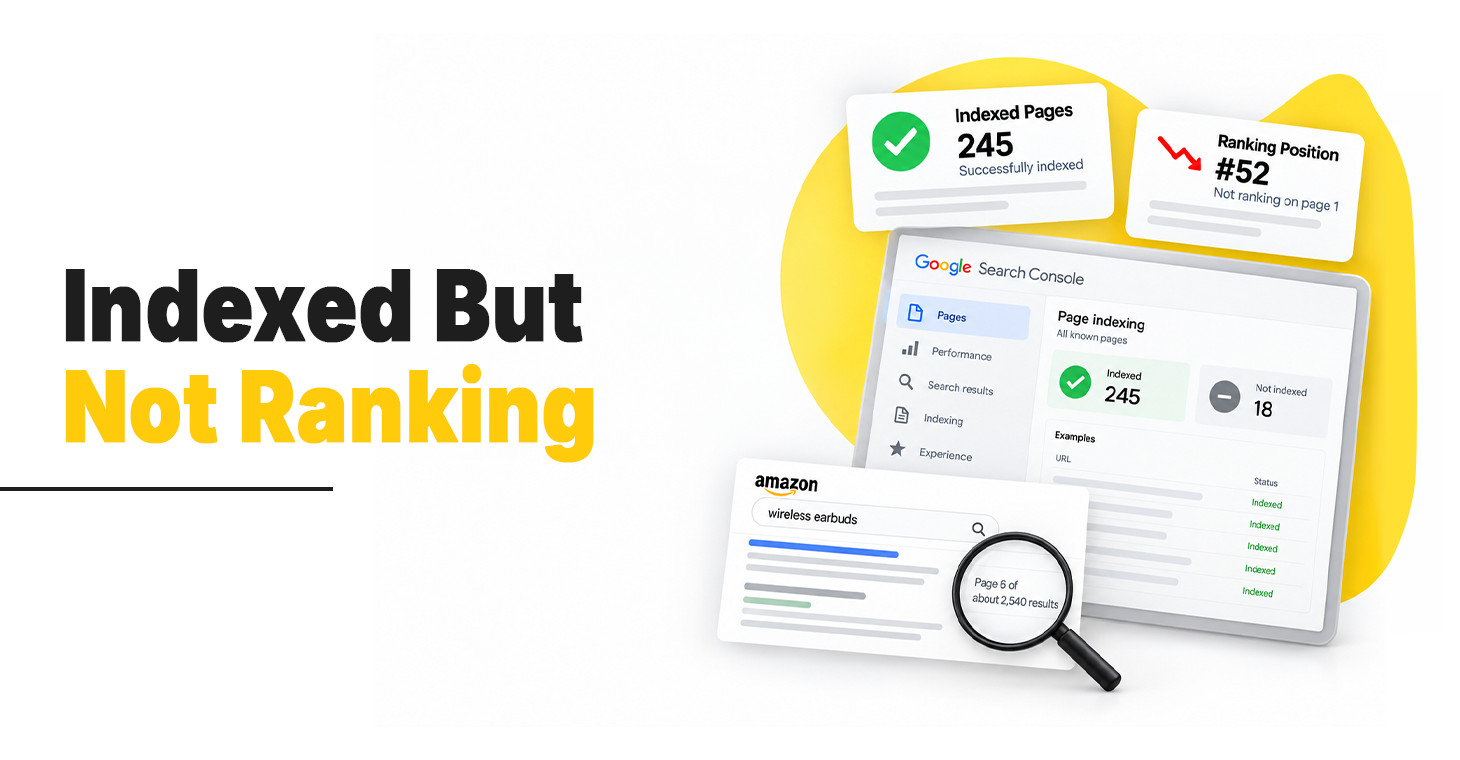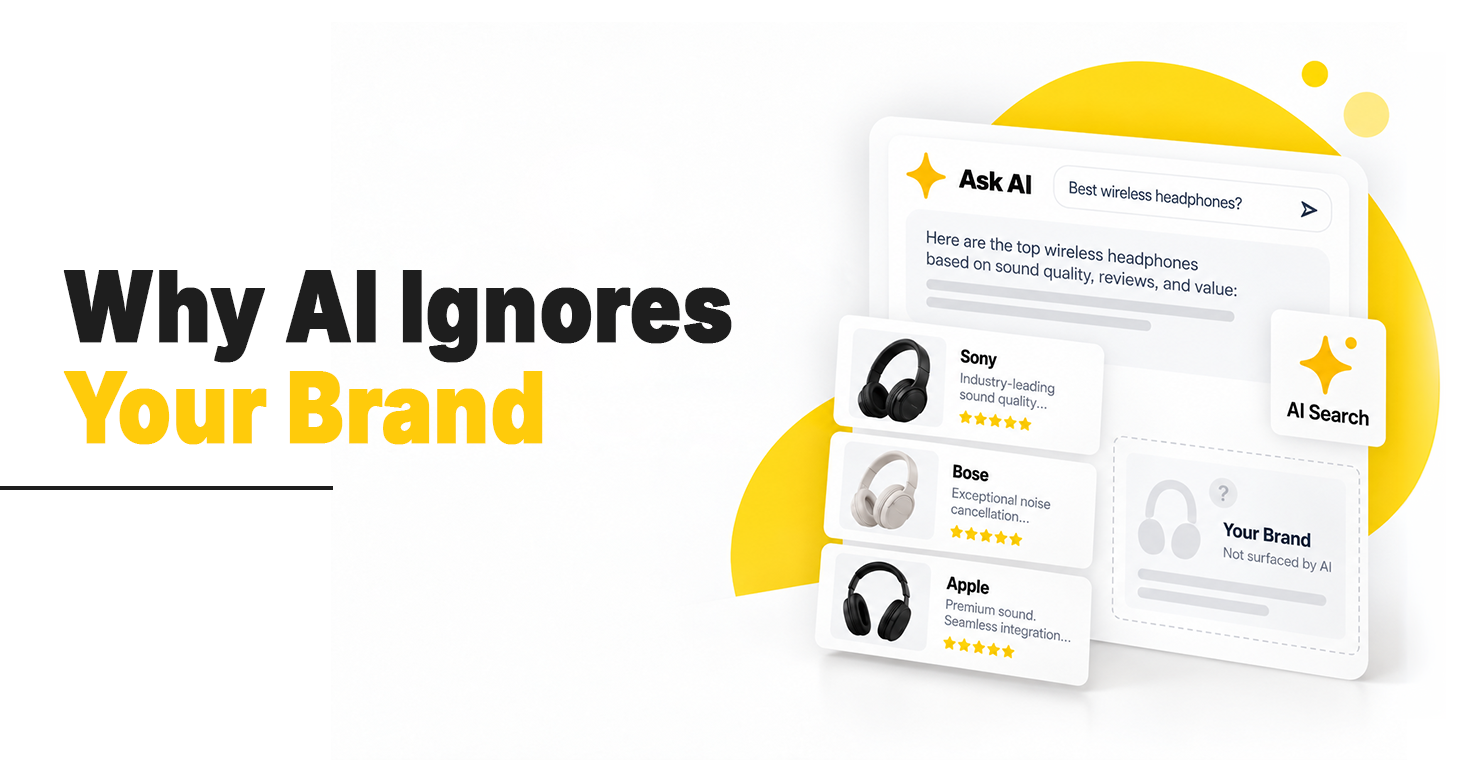


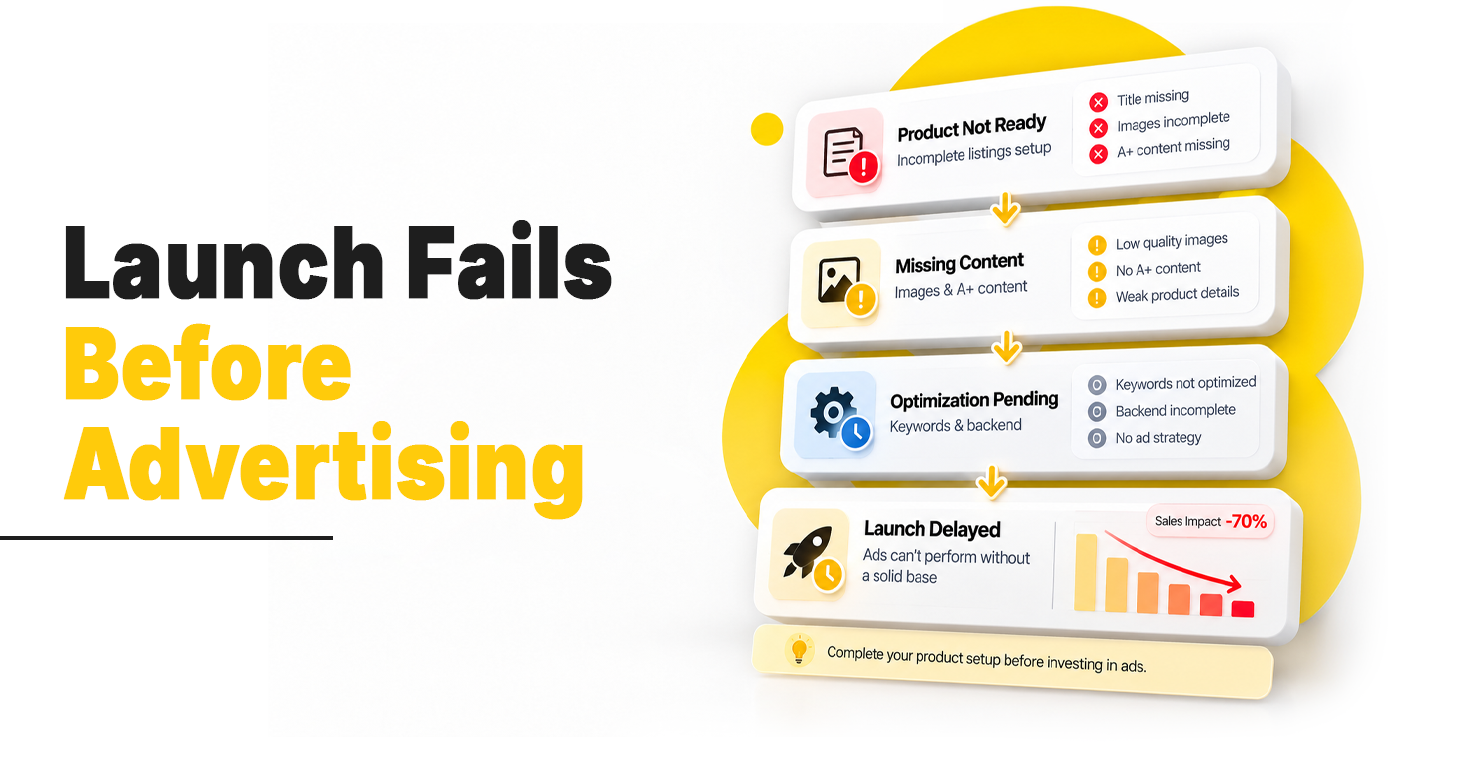
When a new Amazon product fails, advertising often receives the blame first. Yet many launches are weakened before the first campaign begins because the offer, inventory, positioning, listing, or measurement plan is not ready to support paid traffic.
The Direct Answer
An Amazon launch usually fails before advertising when the product enters the market without a clear reason to choose it, the listing cannot convert unfamiliar shoppers, inventory cannot support momentum, or the campaign is asked to discover the customer and prove profitability at the same time. Advertising can expose demand and accelerate discovery, but it cannot repair an unclear offer.
When the Answer Changes
- A genuinely differentiated product may need visibility more than repositioning.
- A familiar product in a crowded category usually needs stronger proof, pricing, images, and comparison content.
- A low-review ASIN may require a different expectation for conversion than an established listing.
- A seasonal launch has a limited testing window and needs inventory, content, and advertising prepared earlier.
Practical Diagnostic Checklist
- Define the target customer, primary use case, and reason to choose the product.
- Compare price, pack size, features, reviews, images, and delivery promise against direct competitors.
- Confirm the title, bullets, images, description, and A+ Content answer major buying questions.
- Check stock coverage, fulfilment readiness, Featured Offer eligibility, and replenishment timing.
- Separate discovery, ranking, branded defence, competitor, and profitability campaign objectives.
- Establish break-even ACoS and the amount available for launch learning.
- Decide which metrics will trigger a bid, budget, listing, pricing, or inventory action.
Screenshot or Account Evidence
Add an anonymized launch-readiness sheet showing content completion, inventory coverage, pricing, review status, campaign objective, and measurement thresholds. Do not add performance claims unless they come from a verified client account with permission.
Decision Table
| Situation | What it usually means | Recommended action |
| Impressions are low | Bids, relevance, eligibility, or demand may be limiting delivery | Check indexing and eligibility before raising every bid |
| Clicks arrive but orders do not | The listing or offer is not converting the traffic | Review search-term relevance, price, proof, and content |
| Orders arrive at unsustainable ACoS | Demand exists but economics or targeting needs work | Refine targets, bids, placements, and contribution margins |
| Sales grow but stock falls too quickly | Launch demand exceeded the inventory plan | Protect availability and adjust spend to replenishment timing |
Mistakes We Commonly Find
- Launching campaigns before the detail page is complete.
- Using one campaign to handle discovery, ranking, and profitability.
- Copying competitor language without creating a clear product position.
- Increasing bids when weak conversion is the actual constraint.
- Planning advertising without connecting spend to margin and inventory.
Recommended Action
Use a launch-readiness gate before activating campaigns. The product should have a clear position, complete listing, competitive offer, sufficient inventory, and defined campaign objectives. Begin with controlled discovery and conversion testing, then move proven search terms and products into campaigns with clearer performance expectations.
Frequently Asked Questions
Should Amazon advertising start on launch day?
It can, provided the listing, stock, pricing, fulfilment, eligibility, and measurement plan are ready. Starting early does not compensate for an incomplete offer.
Can a new product launch succeed without reviews?
Yes, but conversion expectations should be realistic. Clear content, strong product proof, competitive pricing, and relevant traffic become especially important.
Should automatic and manual campaigns launch together?
They can serve different purposes. Automatic targeting can support discovery, while manual campaigns provide greater control over selected keywords and products.
When should a launch strategy change?
Change it when the evidence identifies a specific constraint, such as weak relevance, low conversion, expensive placements, or inventory risk. Avoid reacting to one isolated day.
How I.E.RARE Can Help
I.E.RARE coordinates market research, positioning, listing content, creative, inventory readiness, and advertising through our New Product Launch service.
About the Author
The I.E.RARE team works across ecommerce operations, marketplace advertising, search visibility, content, and conversion improvement. Our articles turn practical account work into clear decisions that brands can use.